How to protect older people in Spain: 9 steps for 2026

Area: Civil law, family, inheritance and assets
Audience: families, carers, older people and family estates
Sources reviewed: ICAB, Parliament of Catalonia, BOE and current civil law
These are the 9 protection measures for older people that should be reviewed:
- Distinguish whether family support is enough or a formal measure is needed.
- Formalise preventive powers or voluntary support measures before a notary.
- Use de facto support only when it works and is properly documented.
- Apply for judicial support where ongoing assistance is essential.
- Plan for a judicial defender or authorisation for specific acts.
- Organise protected assets if there is recognised disability.
- Review wills, forced heirship, gifts and family arrangements.
- Prevent financial abuse, manipulation, isolation and conflicts of interest.
- Review the measures when health, family or assets change.
Age alone does not limit a person’s legal capacity in Spain. An older person keeps their rights, autonomy and ability to decide about health, housing, assets and inheritance. That is why legal protection must be approached carefully: the aim is not to replace decisions, but to create proportionate support so that the person can decide with more security and less risk.
In practice, many families arrive late. First there is a bank transaction that no one can explain, a signature that does not fit the person’s usual behaviour, a new circle of influence, cognitive decline that already makes a notarial visit difficult, or a dispute between siblings about who accompanies, who manages and who decides. At that point, the solution may require court proceedings, medical reports, urgent measures and a much more complex reconstruction of documents.
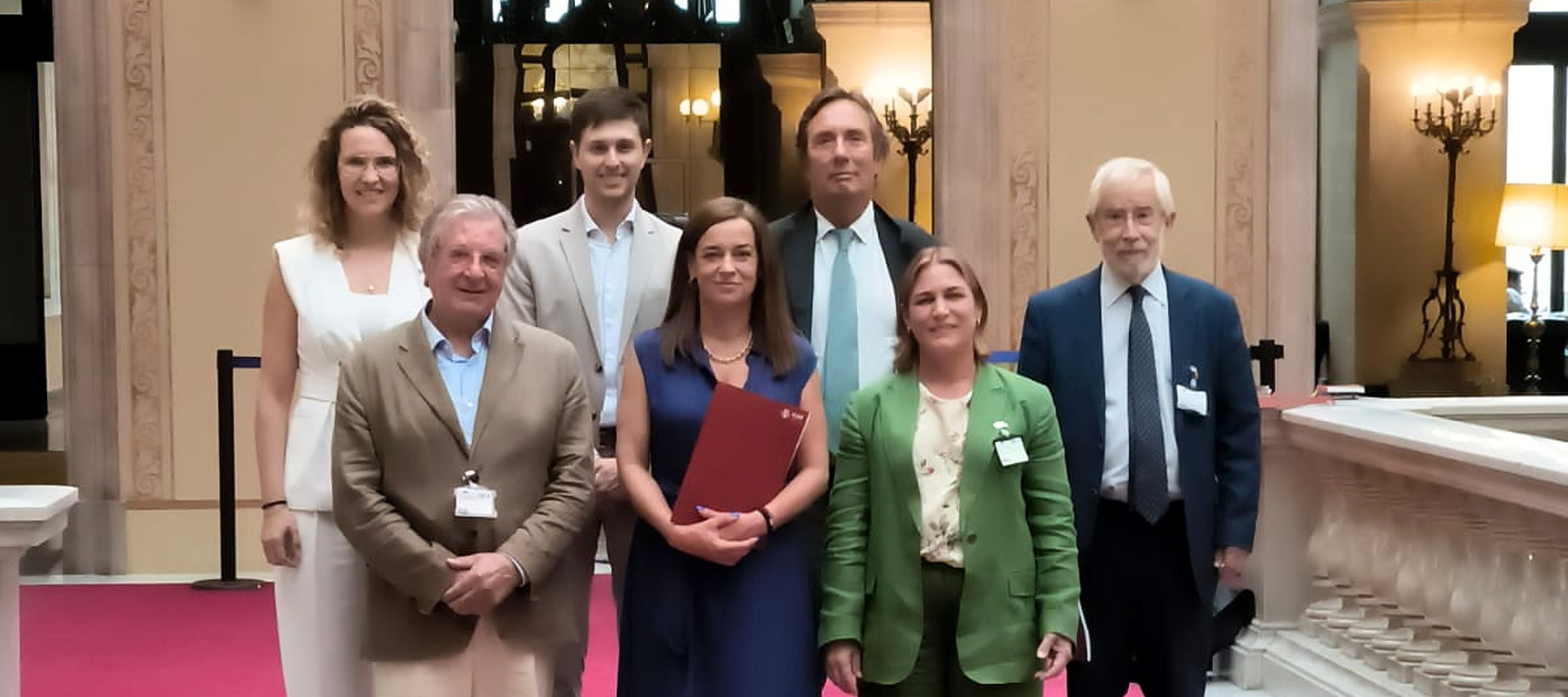
The current Catalan context reinforces this concern. The Barcelona Bar Association reported in July 2026 on a meeting at the Parliament of Catalonia to present amendments to the proposed law on older people, with a focus on improving rights and protection. The proposed Catalan law on older people already places comprehensive protection, prevention of abuse, loneliness and legal and economic security among its objectives.
From a family, civil-law and asset-planning perspective, the useful question is not only which procedure is available, but which combination of tools protects the person without emptying their will. Sometimes it is enough to order documents and powers. Sometimes a court measure is needed. And sometimes the problem is not capacity, but abuse, pressure, isolation or lack of control over assets.
The 9 measures to review
A sound protection strategy starts by organising the case, not by choosing a legal label from memory. Law 8/2021 reformed the Spanish civil support system so that measures respect dignity, fundamental rights and the person’s will, wishes and preferences. It also requires necessity and proportionality: an intensive measure should not be used where a less intrusive alternative works.
| Measure | When it fits | Risk if improvised |
|---|---|---|
| Informal family support | The person understands and decides, but needs practical help. | A third party confuses accompaniment with substitution. |
| Preventive power | The person wants to plan who will act if faculties decline. | No limits, accountability or control mechanisms. |
| Voluntary support measures | The person can still design their support before a notary. | The document does not cover banks, health, housing or assets. |
| De facto support | There is real, stable support that works without a court order. | Blocked transactions or family disputes. |
| Court-appointed support | Ongoing formal support is necessary. | Asking for too much intervention, or asking too late. |
1. Distinguish family help, prevention and formal support
Not every decline, advanced age or dependency situation requires a court measure. If the person understands the scope of their decisions, they can continue deciding with support. The first task is to separate three planes: everyday help, legal representation and asset protection. Mixing them usually creates unnecessary conflict.
2. Formalise preventive powers or voluntary measures
Preventive documents make it possible to decide in advance who will provide support, with what scope and under which safeguards. They are especially useful when the person still has sufficient capacity to express their will. They may cover banking, housing, dealings with authorities, asset decisions, health instructions and control mechanisms.
3. Document de facto support
De facto support can be enough when a trusted person already provides effective assistance. But it should not be treated as an informal solution without evidence. Medical reports, authorisations, receipts, family communications and justification for important decisions should be preserved. If a bank, notary, registry or family member questions an act, that documentation may be decisive.
4. Apply for judicial support when ongoing assistance is needed
Court-appointed support must be tailored to the person’s specific needs. It is not a general label or an automatic deprivation of rights. In judicial support measures, the decision should delimit which acts require assistance or representation, who provides the support and which controls apply.
5. Plan for a judicial defender or specific authorisation
Some operations do not require reorganising the person’s entire legal life, but they do require solving a specific act: selling a home, accepting an inheritance, signing a partition deed, claiming against a relative, authorising an investment or resolving a conflict of interest. In those scenarios, a judicial defender, specific authorisation or time-limited measure may be more proportionate.
Why this issue is back on the table
Protection of older people is moving away from a purely assistance-based view towards a rights, autonomy and prevention framework. The proposed Catalan law on older people, still a legislative initiative and not an enacted law, starts from an obvious demographic reality: more older people, longer life expectancy, more single-person households and more situations where vulnerability does not fit into one category.
The parliamentary text defines older people as those aged 65 or over and sets out comprehensive protection including health, housing, participation, non-discrimination, prevention of abuse, legal accompaniment and economic security. It also refers to measures against asset stripping and advisory services in testamentary and succession matters. That direction connects with practical problems: decisions taken under pressure, uncoordinated families, overbroad powers, unexplained withdrawals or inheritance planning left too late.
Legal caution: a proposed law should not be treated as enacted legislation. It helps understand the direction of the debate, but concrete decisions must be based on current law and the documents of the case.
This distinction matters. Age is not the same as disability. Dependency does not always imply lack of legal capacity. And the need for everyday help does not automatically turn a relative into a legal representative. A safer response is built in layers: the person’s will, available support, asset risks, existing documents, family structure, health, housing and inheritance.
Notarial support, de facto support and court
Choosing between notarial documents, de facto support and court depends mainly on three questions: whether the person can express an informed will, whether current support works, and whether there is conflict or risk. When sufficient capacity still exists, notarial documents often provide better preventive control. When the situation has already deteriorated or there is family opposition, court may be unavoidable.
Voluntary support measures have a clear advantage: they come from the person themselves. They may appoint who helps, exclude certain people, set controls, require accountability, appoint substitutes and organise how to act in particularly sensitive decisions. They should not be drafted as a generic form. In families with assets, businesses, real estate, second marriages, children from different relationships or possible conflict, the document needs much more precision.
De facto support is useful when there is real, stable and accepted assistance. But it can run into practical limits. A financial institution may require additional evidence for certain transactions; the sale of a property may require authorisation; an inheritance may raise a conflict of interest; and a medical or residential decision may trigger opposition among relatives. De facto support should not become a black box.
Judicial support makes sense when the person needs ongoing assistance and voluntary or informal solutions are not enough. The application should include reports and a proportionate proposal. Asking for excessive intervention may conflict with the current support model; asking for insufficient support may leave the person exposed. The balance lies in defining acts, risks and controls.
Assets, home and inheritance
Personal protection and asset protection are not separate compartments. In many families, the risk appears around the family home, bank accounts, cards, old powers of attorney, gifts, care contracts, loans, asset sales or inheritance acceptance. If capacity is reviewed but assets are not, the plan is incomplete.
Where recognised disability exists, it may be appropriate to assess protected assets for people with disabilities. Law 41/2003 provides that the protected estate has the person with disability as its exclusive beneficiary, with assets and rights allocated to their vital needs. It is not a solution for every older person: disability requirements must be met and contributions, administration and supervision must be designed carefully.
Inheritance deserves a separate review. An old will may no longer reflect the current situation: widowhood, dependency, new partners, children with different needs, real estate, family business, previous gifts or possible lack of protection for a vulnerable person. In some cases, wills, powers, support appointments, family instructions and tax planning should be coordinated.
Document checklist before deciding
- ID documents, family record, medical certificates and disability recognition if applicable.
- Powers, deeds, wills, marriage agreements, succession agreements or previous notarial documents.
- List of properties, accounts, investments, insurance, loans and debts.
- Relevant asset movements in recent years.
- Family map: who cares, who decides, who manages and where conflict may arise.
Signs of financial abuse
Legal protection is not only about providing support. It also helps detect and stop abuse. Asset manipulation may be obvious, such as an unexplained withdrawal, or subtle, such as isolating the person, controlling calls, always accompanying them to the bank, pressuring them to change their will or presenting documents when they are not in a condition to understand them.
It is especially important to act quickly if there are sudden changes in beneficiaries, below-market sales, unexpected gifts, new very broad powers, loans to relatives, financial products the person does not understand, restrictions on seeing them alone or contradictory accounts of their wishes. Not every unusual asset decision is abuse, but every consistent warning sign deserves a document review.
The response may include civil, notarial, banking, criminal or urgent measures depending on the case. It may also be enough to organise evidence, revoke powers, request accounts, separate family roles or apply for a limited judicial measure. The important point is not to react only emotionally: allegations without documents can worsen the conflict and make it harder to protect the person.
How GraciaCalbet can help
At GràciaCalbet we approach protection for older people from a civil, asset, inheritance and tax perspective. This makes it possible to review the full case: the person’s will, available support, preventive powers, judicial measures, housing, inheritance, protected assets, risk of abuse and coordination among relatives.
We can help assess whether it is appropriate to prepare asset protection and support measures, formalise preventive documents, apply for a proportionate judicial measure or design an inheritance strategy that reduces conflict. In urgent situations, we also review documents and warning signs to decide whether immediate action is needed.

Frequently Asked Questions (FAQs)
Does an older person need support measures simply because they are 65?+
No. Age does not limit legal capacity. Support measures are assessed when the person needs help to exercise capacity in specific areas, and they must be necessary, proportionate and respectful of the person’s will.
What is the difference between a preventive power and judicial support?+
A preventive power is usually granted by the person before a notary while they can still decide. Judicial support is a court measure for ongoing assistance where voluntary or informal measures are not enough.
Can de facto support allow the sale of a home?+
It depends on the case and the transaction. Significant asset acts may require authorisation, additional documentation or court involvement. Before signing, the person’s situation, the support title and the protected interest should be reviewed.
Are protected assets useful for any older person?+
No. Protected assets are designed for people with disabilities who meet the legal requirements. They may be very useful, but they do not replace powers, support measures, wills or family planning.
When should an older person’s will be reviewed?+
It should be reviewed when family, assets, health, housing, relationships between heirs or the needs of a vulnerable person change. It is also advisable where there have been gifts, second partners, family businesses or a likely succession dispute.
What should I do if I suspect financial abuse of an older person?+
The first step is to organise evidence: transactions, powers, signatures, messages, reports and asset changes. Then it is possible to assess whether to revoke powers, request accounts, apply for judicial measures or take other action.